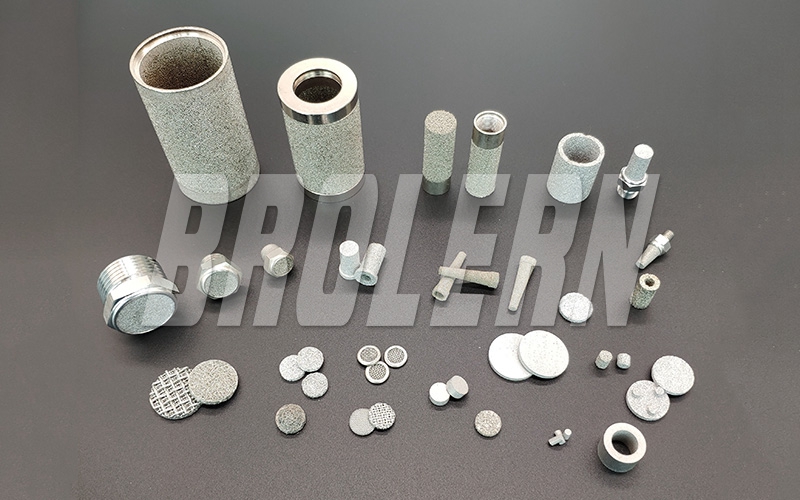
BROLERN Stainless Steel Filter Cartridges - the product family this guide covers
Core points
- Industry RFQ guides are blunt: a brief description is not sufficient - ask the supplier for a drawing showing how the cartridge seats in the housing [Filter Element industrial buying guide].
- End styles are not interchangeable: DOE (double open end), SOE 222 flat/fin, SOE 226 flat/fin, threaded and flanged each match a different housing [Praimo RFQ specification table].
- NPT and BSPP are not compatible even at the same nominal size - one is tapered and thread-sealed, the other parallel with a gasket [Filter Element industrial buying guide].
- Seal materials - EPDM, NBR, FKM/Viton, silicone, PTFE-encapsulated - are selected by fluid, cleaning chemicals, temperature and sterilisation cycle, and the RFQ should forbid unapproved substitutions [Praimo RFQ specification table].
- BROLERN manufactures all standard end styles and threads on every media family - sintered plastic, bronze, stainless, PVF, fiber, melt-blown, pleated and wound.
The interface decoder
| DOE | Double open end - both ends open, seals on housing seats; the common 10" format |
|---|---|
| SOE 222 | Fin or flat cap with 222 O-ring bayonet - pull-down or spear types |
| SOE 226 | Fin or flat cap with 226 O-ring bayonet and locating hole |
| Threaded ends | Integral threads on sintered elements (M5 to 2", NPT/BSPP/BSPT) - common on silencers and strainers |
| Seals | EPDM (hot water/steam), NBR (oils), FKM/Viton (solvents, aggressive chemistry), silicone, PTFE-encapsulated |
How overseas buyers get this wrong
The failure pattern is always the same: the media and the rating are right, but the element does not seat - because the housing wanted a 226 fin cap and the order said 222 flat, or because a BSPP port received an NPT thread. Sintered elements add one more trap: on threaded bronze or stainless parts, the thread and seal - not the porous body - usually set the assembly temperature limit. Measure the housing seat and the old element with calipers, photograph both ends, and put the photos in the RFQ. BROLERN confirms the interface in writing before production starts.
FAQ
DOE or SOE?
Your housing decides - measure the seat: open seats take DOE; O-ring and bayonet arrangements take SOE 222/226.
NPT or BSP?
Match the port, not the nominal size - NPT seals on the thread taper, BSPP needs a face or gasket.
Which seal material?
EPDM for hot water and steam, NBR for oils, FKM/Viton for solvents and aggressive chemistry, silicone for food-grade duty [Praimo RFQ specification table].
Conclusion
Interface mismatches are the cheapest failures to prevent and the most expensive to discover on site. Send the housing seat drawing or the old element's ends - BROLERN will match the end style, thread and seals exactly, on any media family.
FAQ
What is the difference between DOE and SOE 222/226?
DOE is double-openEnded (seals on the housing seats); SOE 222/226 use fin or flat caps with O-rings and a bayonet or spear arrangement - the housing decides, not preference.
NPT or BSP - are they interchangeable?
No. NPT is tapered with thread-sealing; BSPP is parallel and needs a sealing face or gasket. Same nominal size does not mean the same fit.
Which seal material should we choose?
By fluid chemistry, cleaning chemicals, temperature and sterilisation cycle - EPDM, NBR, FKM/Viton, silicone and PTFE-encapsulated are not interchangeable.