Core points
- Gas duty is a different discipline from liquid duty. You are usually chasing three different contaminants - dust, oil mist and odour - and one element rarely solves all three.
- Particulate: fibre or sintered bronze. Coalescing: a glass-fibre or fine-porous element that turns mist into drainable liquid. Adsorbing: activated carbon for vapour and odour.
- Gas elements are chosen more by temperature, pressure and droplet size than by micron rating alone.
- Sintered bronze is the robust choice for compressed air; glass fibre is the economical choice where temperature and chemical duty are mild.
The three gas-phase contaminants
| Contaminant | Typical source | What removes it |
|---|---|---|
| Dust / particulates | Compressor wear, intake air | Fibre, sintered bronze, pleated |
| Oil mist / aerosols | Compressor lubrication, seals | Coalescing element (glass fibre, fine pore) |
| Odour / vapour / hydrocarbons | Leaks, lubricants, process | Activated carbon |
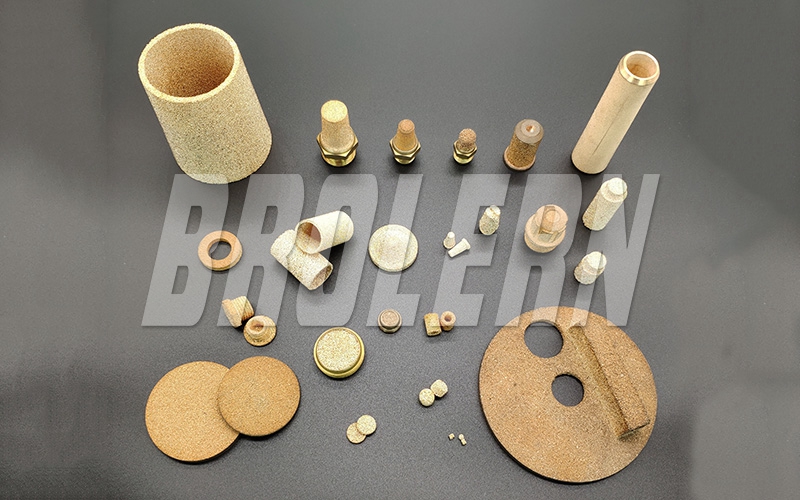
Gas-phase duty: bronze and fibre elements for particulate and coalescing, with silencers for the exhaust side.
Coalescing is a mechanism, not a rating
A coalescing element works by capturing fine mist, growing the droplets until they are heavy enough to fall and be drained. It is not a finer filter. That distinction matters when you specify: the question is not "what micron" but "what droplet size am I trying to capture, and where does the liquid go once it is captured?" A cartridge cannot drain itself if the housing has no drain.
Material choice for gas duty
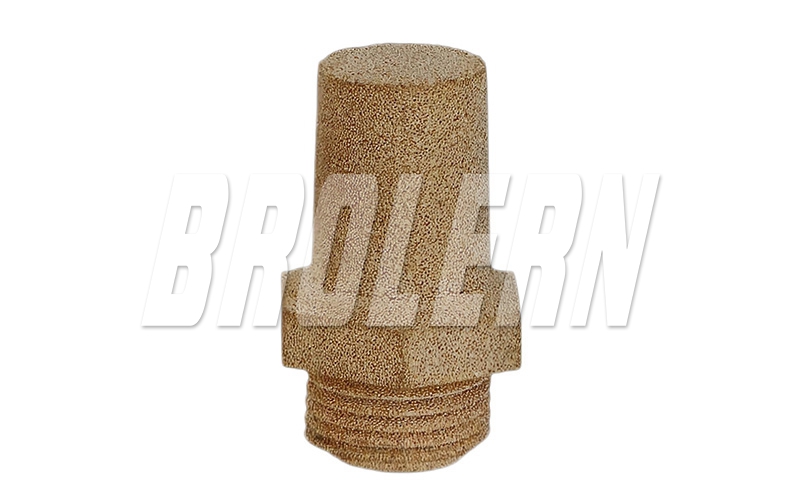
- Sintered bronze - robust, washable, tolerant of heat and oil, the default for compressed air and silencer duty.
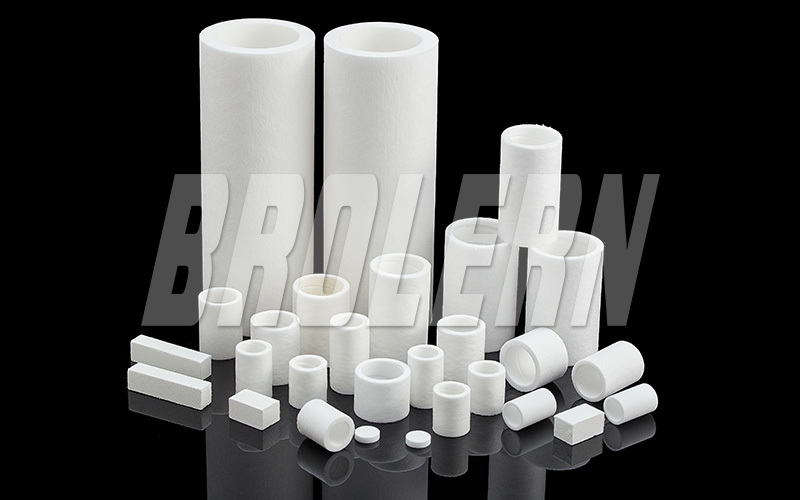
- Glass fibre - economical, good particulate and coalescing performance, keep below its temperature limit and away from aggressive chemistry.
- PP fibre - light and cheap, suitable for mild, cool air or gas service.
- Activated carbon - for vapour and odour only; it does not remove dust, so it is normally the last stage after a particulate element.
For the silencing side of the same duty - where the element is working against exhaust noise as well as debris - see our pneumatic silencer range.
FAQ
Can one element handle dust, oil mist and odour together?
Rarely well. The usual arrangement is a particulate element, then a coalescing element, then activated carbon. Carbon alone will not stop dust and will foul quickly in front of it.
Does a coalescing element need micron rating?
Less than you would think. It is chosen mainly by droplet size and by the drain arrangement of the housing. The micron label is secondary.
Why is sintered bronze common on compressed air?
It handles heat, oil and pressure, can be cleaned or replaced reliably, and resists the temperature spikes that occur near a compressor discharge.
Conclusion
A filter cartridge is a small part of a larger system, and the expensive mistakes are almost always specification mistakes made before the quote. Fix the duty first, then choose the format and the media, then put the acceptance tests in writing. Send BROLERN your fluid data and we will return a drawing, a media recommendation and a test protocol.
Applying this to your process?
Send us the duty sheet - fluid, temperature, pressure, flow, target micron, housing type and quantity - and we will return a shortlist with a drawing and a firm quote. Browse the product index or start from the RFQ form. Not sure of the format yet? Ask for two sample cartridges so your team can bench-test both.