Core points
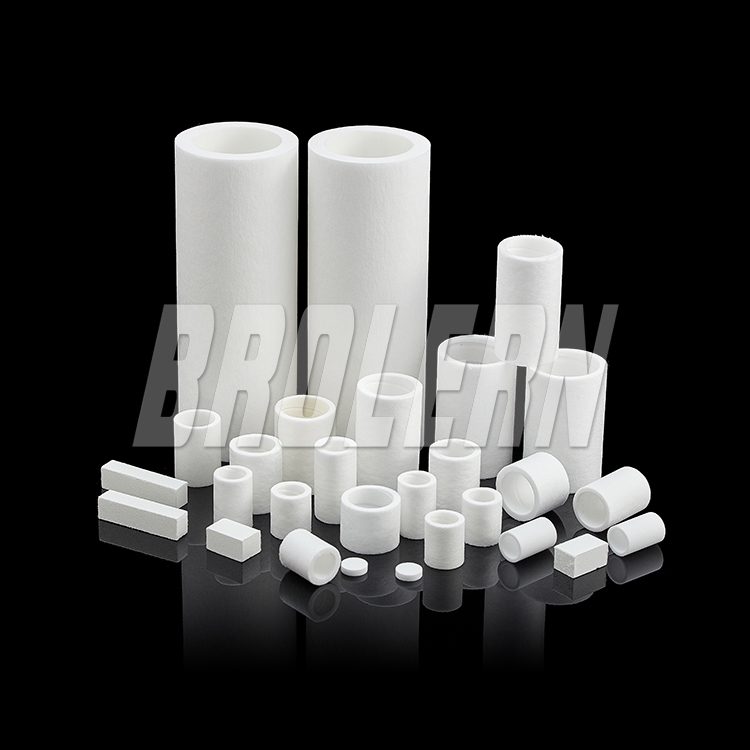
- BROLERN fiber cartridges use PP and glass fiber media, RoHS compliant, with complete size range and uniform micro-pore distribution.
- Ratings reach 0.5 µm, covering filtration and silencing of air, water and oil in one family.
- Glass fiber media adds coalescing capability: industry elements built on borosilicate glass micro-fibre reach 99.9999% removal at 0.1 µm with pore volumes above 90% [borosilicate glass-fiber coalescing element datasheet].
- The family is widely used across pneumatics, chemical, food, pharmaceutical and environmental industries.
- Custom shapes are manufactured to customer drawings or samples.
PP fiber or glass fiber?
PP fiber media is the economical generalist: acid and alkali resistant, dimensionally stable, ideal for air, water and oil duties where the contaminant is particulate. Glass fiber media earns its premium where liquids must be separated from gases - the fibre surface captures aerosol droplets, coalesces them into larger drops, and lets gravity do the draining. Industry glass-fibre coalescers pair the media with PVDF or resin bonding for corrosive gas duty [borosilicate glass-fiber coalescing element datasheet]. BROLERN supplies both media, matched to the medium and the precision target.
Typical parameters (BROLERN production range)
| Media | PP fiber; glass fiber (borosilicate); combinations on request |
|---|---|
| Compliance | RoHS |
| Filtration rating | Down to 0.5 µm |
| Structure | Uniform micro-pore distribution, acid and alkali resistant |
| Duties | Air, water and oil filtration and silencing |
| Industries | Pneumatics, chemical, food, pharmaceutical, environmental |
Pairing fiber media with the rest of the line
Fiber cartridges sit naturally between sintered media and depth cartridges: where a sintered bronze element protects a valve from hot oily exhaust, a PP fiber cartridge handles cooler aqueous duty at a finer rating. For gas streams carrying oil aerosol, glass fiber coalescing media ahead of a particulate stage keeps the downstream elements clean longer - the standard pattern in process gas filtration.
FAQ
PP or glass fiber - which for compressed air?
For dry particulate duty, PP. Where the air carries oil aerosol, glass fiber coalescing media first, then a particulate stage.
Are the media RoHS compliant?
Yes - both PP and glass fiber media comply with RoHS; documentation is available with shipment.
Can you match our housing dimensions?
Yes - lengths, diameters and end configurations are produced to customer drawings or samples.
Conclusion
Fiber cartridges are the bridge media of the BROLERN portfolio: economical like depth media, precise like membranes, and available in PP or glass fiber to match the medium. Send the duty and we will propose the media - sample quantities available.