Core points
- A nominal rating is a manufacturer claim of roughly 50-90% capture at a stated size, with no agreed test behind it - two suppliers can both print "10 micron" and deliver very different performance [SourceBySpec industrial filter encyclopedia].
- The disciplined buyer reads the test standard: hydraulic and lube filtration uses the beta ratio under the ISO 16889 multipass test [SourceBySpec industrial filter encyclopedia].
- Beta(x) = upstream particle count / downstream count at size x; efficiency = (beta-1)/beta. Beta 200 = 99.5%, the common absolute-rated catalogue point [SourceBySpec industrial filter encyclopedia].
- Fluid cleanliness is reported with the ISO 4406 code (e.g. 18/16/13) - three particle counts per millilitre at 4, 6 and 14 µm [SourceBySpec industrial filter encyclopedia].
- BROLERN publishes nominal ratings for standard lines and provides ISO 16889 style validation per project for rated grades.
The beta ratio, in one table
| Beta(x) = 2 | 50% capture - nominal-grade performance |
|---|---|
| Beta(x) = 20 | 95% - coarse protective filter |
| Beta(x) = 75 | 98.7% - ISO 16889 minimum testable |
| Beta(x) = 200 | 99.5% - common absolute-rated catalogue point |
| Beta(x) = 1000 | 99.9% - high-efficiency element |
Why this matters for stainless steel cartridges
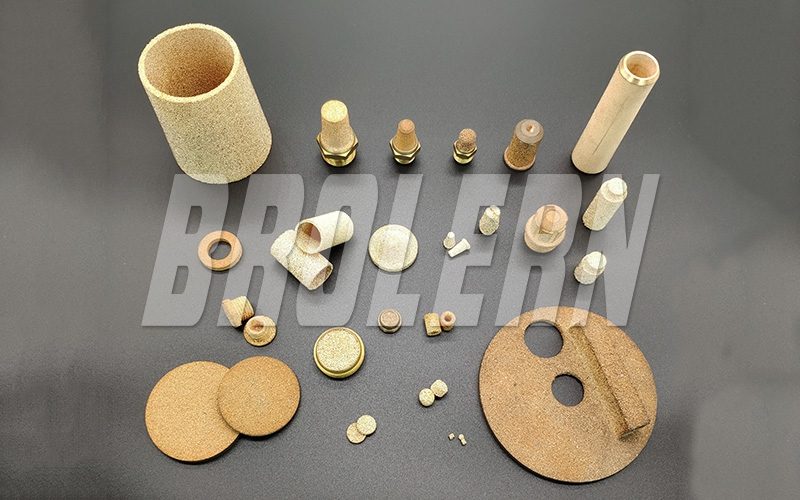
Sintered stainless steel media is specified where the duty is hot, corrosive or high-pressure - and where a failed element costs a shutdown. At those stakes, a nominal number on a quotation is not a specification. Ask for the test basis: multipass beta data for rated grades, bubble-point pore evidence for sintered media, and the ISO 4406 cleanliness target the element is expected to hold. BROLERN supplies multi-layer sintered mesh cartridges across 2-200 µm with documented ratings, and manufactures to customer dimensions where catalogue geometry does not fit.
Three questions that replace a datasheet fight
One - what is the test standard behind the printed rating? Two - what efficiency at what particle size, measured how? Three - what cleanliness code must the downstream fluid hold, and is the element sized to reach it? Suppliers who answer all three in writing are the ones whose elements will behave in your plant.
FAQ
Nominal or absolute?
Nominal for economical clarification; absolute (beta-tested) grades wherever downstream equipment or product quality depends on a guaranteed cut-off.
Does ISO 16889 apply to sintered media?
The multipass method was built for hydraulic elements; for sintered media we quote bubble-point and permeability data alongside, plus multipass validation where the duty demands it.
What should we ask for with a stainless steel cartridge RFQ?
Rating with test basis, media grade, dimensions, temperature and pressure limits - and the cleanliness code the system must hold.
Conclusion
A datasheet is a contract only when the test method is named. Read beta ratios, not micron headlines - and hold your supplier to the standard. BROLERN documents ratings for every stainless steel cartridge it ships.