Core points
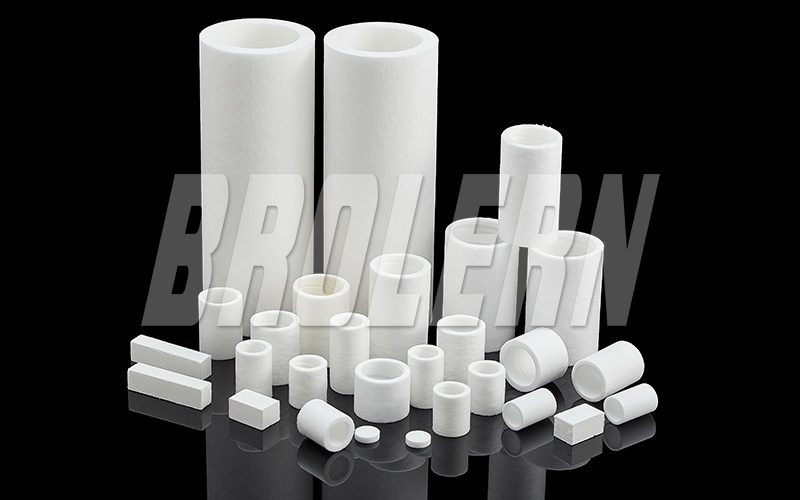
- Melt-blown cartridges are available with six surface finishes - smooth, orange-peel, embossed, dotted, slit and matte - each changing how the cake forms and releases, not just how the surface looks.
- Pleated membrane selection is a chemistry decision: PP, PES, PTFE and nylon each have documented compatibility limits - PTFE for solvents and vents, PES for aqueous and pharmaceutical streams, nylon for plating and electronics chemicals [PoreFiltration membrane materials article].
- Public compatibility tables grade media C / LC / NC (compatible / limited / not compatible) per chemical and concentration - and recommend testing under real operating conditions [Critical Process chemical compatibility table].
- Known limits worth memorising: PTFE is hydrophobic (pre-wet with alcohol for aqueous duty); PVDF fails with acetone, DMSO, THF and DMF; nylon binds proteins and fails with acids [Camlab membrane selection guide].
- BROLERN produces melt-blown in all six finishes and pleats PP, PES, PTFE and nylon in house - so the two decisions are optimised together.
Melt-blown surface finishes, decoded
| Smooth | Cake releases cleanly on backpulse - good for rinsing duties |
|---|---|
| Orange-peel / embossed | Spreads the load, resists early surface blinding |
| Dotted / matte | Higher initial dirt pick-up on fibrous contaminants |
| Slit (grooved) | Channels flow along the cartridge - useful on viscous or fibrous feeds |
The finish changes where dirt sits and how it leaves. On viscous or fibrous feeds a smooth surface blinds early; a slit or matte surface keeps channels open. On rinsing duty, smooth releases the cake. Specify the finish with the duty, not after the fact.
Pleated membrane chemistry, in brief
| PP media | Broad acids/alkalis tolerance; avoid benzene, carbon tetrachloride, nitric/sulfuric acid [Camlab membrane selection guide] |
|---|---|
| PES | Aqueous and pharmaceutical streams; avoid DMSO, nitric and sulfuric acid, phenol [Camlab membrane selection guide] |
| PTFE | Solvents, gases, vent duty; hydrophobic - pre-wet with alcohol for aqueous [Camlab membrane selection guide] |
| Nylon | Plating solutions, photoresists, electronics chemicals; avoid acids; higher protein binding [PoreFiltration membrane materials article] |
FAQ
What does the surface finish actually change?
Cake release, flow distribution and early blinding resistance - the rating stays the same, the service behaviour does not.
Which membrane for solvents?
PTFE, with the broadest solvent tolerance; for aqueous pharmaceutical streams, PES.
Where is the compatibility table?
Public filter-materials tables grade each media per chemical - and they all end with the same advice: test under real operating conditions before final approval.
Conclusion
Two specification details that rarely appear in quotations decide how a cartridge behaves in service: the surface finish of the depth media and the chemistry of the membrane. BROLERN controls both in house - ask us to specify the pair for your duty.
FAQ
What do melt-blown surface finishes change?
Release behaviour, flow distribution and dirt presentation - smooth releases cakes cleanly, textured surfaces spread the load and resist early blinding.
Which pleated membrane for solvents?
PTFE - naturally hydrophobic with the broadest solvent tolerance. For aqueous and pharmaceutical streams, PES; nylon suits plating and electronics chemicals.
Where does the compatibility table come from?
Public filter-materials compatibility references grade media C (compatible), LC (limited) and NC (not compatible) per chemical - test under real operating conditions before final approval.