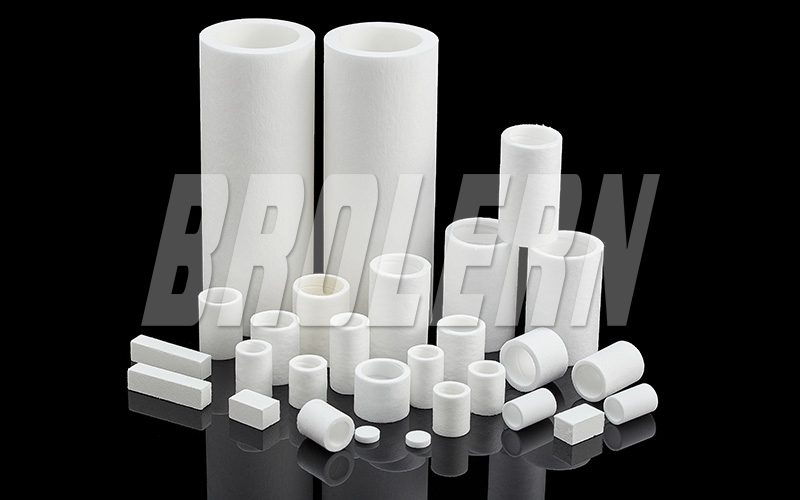
A pneumatic silencer (exhaust muffler) is the small porous element screwed into a valve port or cylinder that quiets the air bursting out at the end of every stroke. Left open, a pneumatic exhaust is a sharp, high-frequency crack that carries across a shop floor and drives up the noise dose for everyone nearby. A sintered porous silencer diffuses that burst through thousands of fine channels, dropping the sharpness without choking the cycle. This guide covers the four things that actually decide the choice — thread, flow, noise target and back-pressure — and when a plain muffler is not enough.
Why a pneumatic exhaust is loud in the first place
Compressed air leaving a valve is a high-pressure, high-velocity jet. As it expands into the atmosphere it creates turbulence and shock waves — broadband noise with a strong high-frequency content that the ear reads as a “crack”. A porous silencer works by splitting that single jet into many tiny jets and forcing the air through a long, tortuous path. Two things happen: the flow energy is dissipated across a larger area, and the pressure is staged down gradually, which is what removes the sharp peak. The trade is a small rise in back-pressure, so the whole selection problem is “quiet enough, without slowing the cylinder down”.
The four selection variables
| Variable | What it decides | How to read it |
|---|---|---|
| Port thread | Physical fit — the hard constraint | Match the valve/cylinder port exactly: M5, M6, 1/8″, 1/4″, 3/8″, 1/2″ up to 2″ are the common range. |
| Exhaust flow | Whether the element chokes the cycle | Size on the peak flow the port actually sees (Cv, L/min or SCFM), not the average. |
| Noise target | How aggressive the damping must be | Set a dB target for the cell; a bigger or denser element reduces more but adds back-pressure. |
| Back-pressure budget | Whether cycle speed / force survives | High-speed or force-critical cylinders need a low-restriction element. |
Get the thread right first — it is the only variable that is pass/fail. Then balance the other three: every decibel you buy back costs you some back-pressure.
Plain exhaust muffler vs speed-control muffler
Most silencers only dampen noise. A speed-control (flow-control) muffler adds an adjustable needle or throttle so the same element also meters the exhaust — and therefore the cylinder speed. If you need to slow the out-stroke, cushion an end-of-travel, or tune a blow-off, the speed-control type does two jobs in one port.
- Plain exhaust muffler — noise only, lowest restriction, use where the valve already controls speed.
- Speed-control muffler / exhaust-muffler throttle valve — noise plus adjustable flow; use where you want to meter speed from the exhaust side without a separate flow control.
- Porous-media choice — sintered bronze for general duty, sintered plastic for wash-down / corrosive or lighter duty, stainless where the environment is harsh or the part must be cleaned.
BROLERN's silencer range spans plain exhaust mufflers, SD-type speed-control mufflers and PS-type exhaust-muffler throttle valves in threaded sizes from M5 up to 2″, so the speed-control and plain functions are available across the same port sizes.
Sizing: start from flow, not from the box
The most common mistake is buying by thread size alone. A 1/4″ element for a lazy actuator will choke a fast one. A practical approach:
- Estimate the peak exhaust flow for the worst-case stroke (bore area × velocity × strokes per second, or read it from the valve's flow spec).
- Check the element's free-flow / rated flow at an acceptable pressure drop — a good rule is to keep the silencer's own ΔP a small fraction of supply pressure.
- Confirm the dB reduction quoted for that series meets your cell target at that flow.
- If the element plugs with oil mist or dust, step up a size or add a pre-filter — porous media traps what the air carries.
Where these silencers are specified
- Factory automation — quieting cylinder exhaust on assembly lines, pick-and-place and packaging cells (pneumatic silencer for automation).
- Automotive and marine — exhaust and breather duty where vibration and wash-down rule out paper or foam.
- Air tools and blow-off — taming the noise and flow of continuous-bleed ports.
- Food and wash-down areas — sintered plastic elements that survive cleaning chemicals.
FAQ
How do I know the thread size if the port is unmarked?
Measure the port's major diameter and pitch, or match the existing muffler. Thread standards (metric vs NPT/BSP) matter as much as diameter — a metric M5 and a 1/8″ NPT are not interchangeable, so send a photo or a used sample if unsure.
Does a silencer slow my cylinder down?
Slightly, through added back-pressure. Size on peak flow and keep the element's restriction a small fraction of supply pressure; if cycle time is critical, use a larger element or a speed-control type and tune it.
Why did my muffler plug up?
Porous media also filters the air. Oil mist, dust and water collect in the pores and raise back-pressure over time. Use cleaner air, add a pre-filter, or choose a cleanable sintered element that can be back-flushed or soaked.
Conclusion
Choosing a pneumatic silencer is a balance of four variables — thread, flow, noise target and back-pressure — with thread as the only hard constraint. Plain exhaust mufflers cover noise-only duty; speed-control mufflers and exhaust-muffler throttle valves add adjustable flow where you also need to meter speed. Tell us your port thread, peak flow and noise target, and the BROLERN team will match a series from the silencer range and send a sample for fit and dB check.