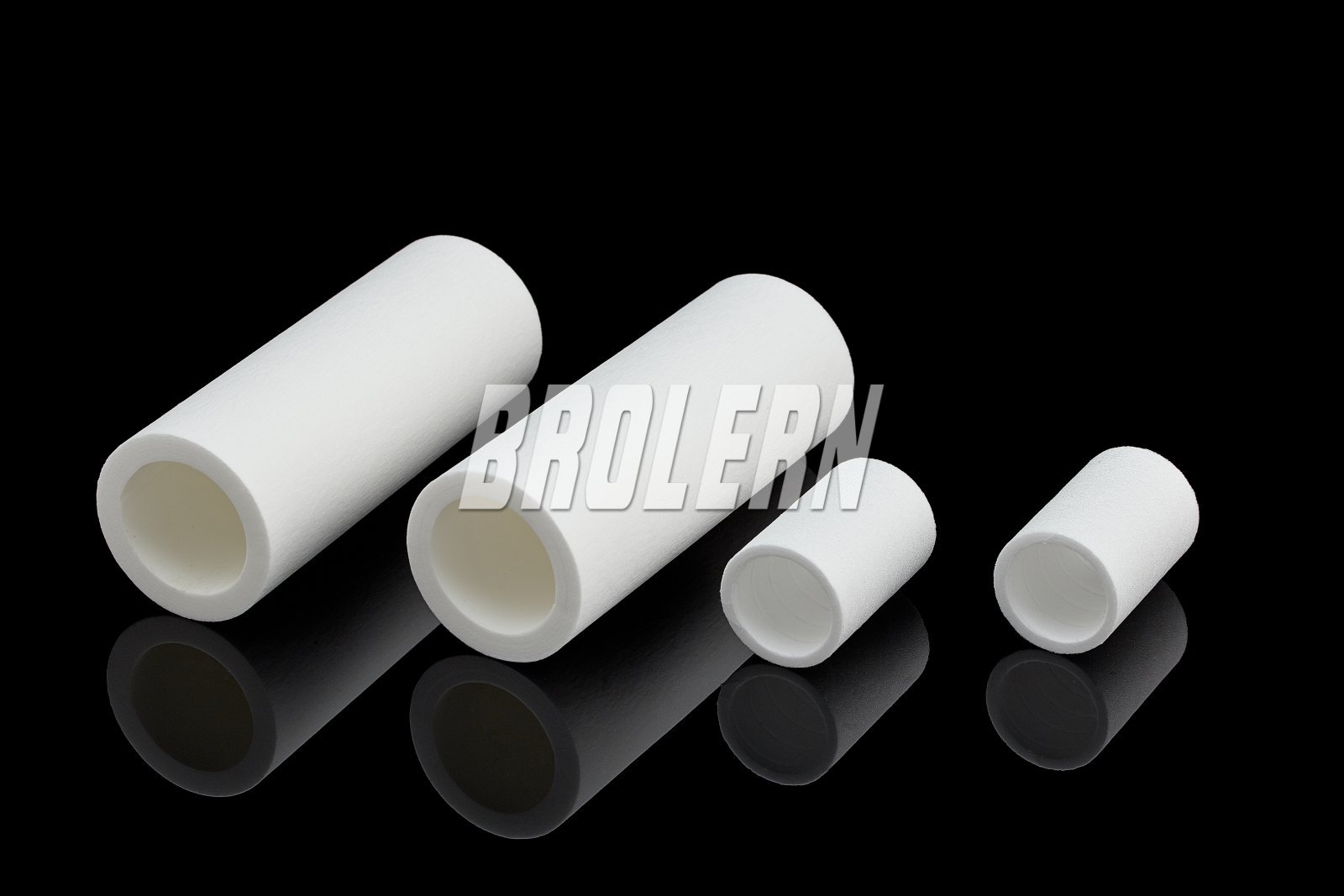
A fiber filter cartridge removes particles using a bonded web of fine fibres — polypropylene (PP) for most aqueous and mild-chemical duty, and glass fibre where a finer nominal rating or higher temperature is needed. Unlike a sintered element, the media is built from fibres rather than a single fused body, which lets it reach fine nominal ratings down to about 0.5 µm at low cost. This article explains the two fibre types, where each fits, and how fibre media compares with sintered and sponge media.
Polypropylene vs glass fibre
| Aspect | Polypropylene (PP) fibre | Glass fibre |
|---|---|---|
| Typical rating | Coarse to fine nominal | Finer nominal, down to ~0.5 µm |
| Chemical range | Broad for aqueous / mild acid-alkali | Good, with higher temperature ceiling |
| Cost | Low | Moderate |
| Best role | General-purpose liquid polishing | Fine nominal + higher temperature |
Both are offered in RoHS-compliant constructions. Choose PP for general-purpose liquid polishing where the chemistry is compatible; choose glass fibre when you need a finer nominal cut or a higher temperature ceiling.
Where fibre cartridges are used
- Water and compatible aqueous streams — pre-filtration and final polishing of process and rinse water.
- Mild-acid and mild-alkali duty — within the polymer and glass chemical ceiling.
- Pre-filtration ahead of membranes — protecting finer, more expensive final stages cheaply.
- General industrial liquids — where a low-cost fine nominal rating is enough.
Fibre vs sintered vs sponge media
The three are complementary. A fibre cartridge is the low-cost choice for fine nominal polishing of compatible liquids. A sponge (porous polymer) cartridge is the high-flow, no-shedding option where media migration is unacceptable. A sintered plastic element is the clean, inert, often moulded option for product-contact and shaped parts. And where the fluid is hot, corrosive or must be cleaned and reused, move to sintered metal.
Specifying a fibre cartridge
- State the fluid, concentration and temperature so the fibre and binder are confirmed compatible.
- Give the micron rating and whether a nominal or verified cut is required for the downstream component.
- Match length, diameter and end connections to the existing housing.
- Treat the rating as a nominal depth class unless a verified cut is specified; follow a finer absolute stage where a hard cut matters.
FAQ
Will a fibre cartridge shed fibres into my stream?
A properly bonded fibre element is constructed to stay intact in normal service, but because the media is a web rather than a single fused body, it is less suited than a bonded sponge or sintered element to lines where any media migration is strictly unacceptable. Where zero shedding is mandatory, choose sponge or sintered media.
Can I clean and reuse a fibre cartridge?
Fibre cartridges are generally treated as disposable elements; attempting to clean them risks loosening the web. For a cleanable, reusable element, use sintered metal.
How do I know the fibre media is compatible with my fluid?
Send the exact fluid, concentration and temperature. Compatibility is media-specific, so the grade is checked against your chemistry rather than assumed from a generic material name.
Conclusion
Fibre filter cartridges are the economical fine-nominal option for compatible liquids: bonded polypropylene for general duty and glass fibre for a finer cut and higher temperature, both RoHS-compliant. They polish water and mild-chemical streams cheaply and protect finer final stages. Tell us your fluid, micron target and housing, and the BROLERN team will confirm the media and send a sample for qualification.