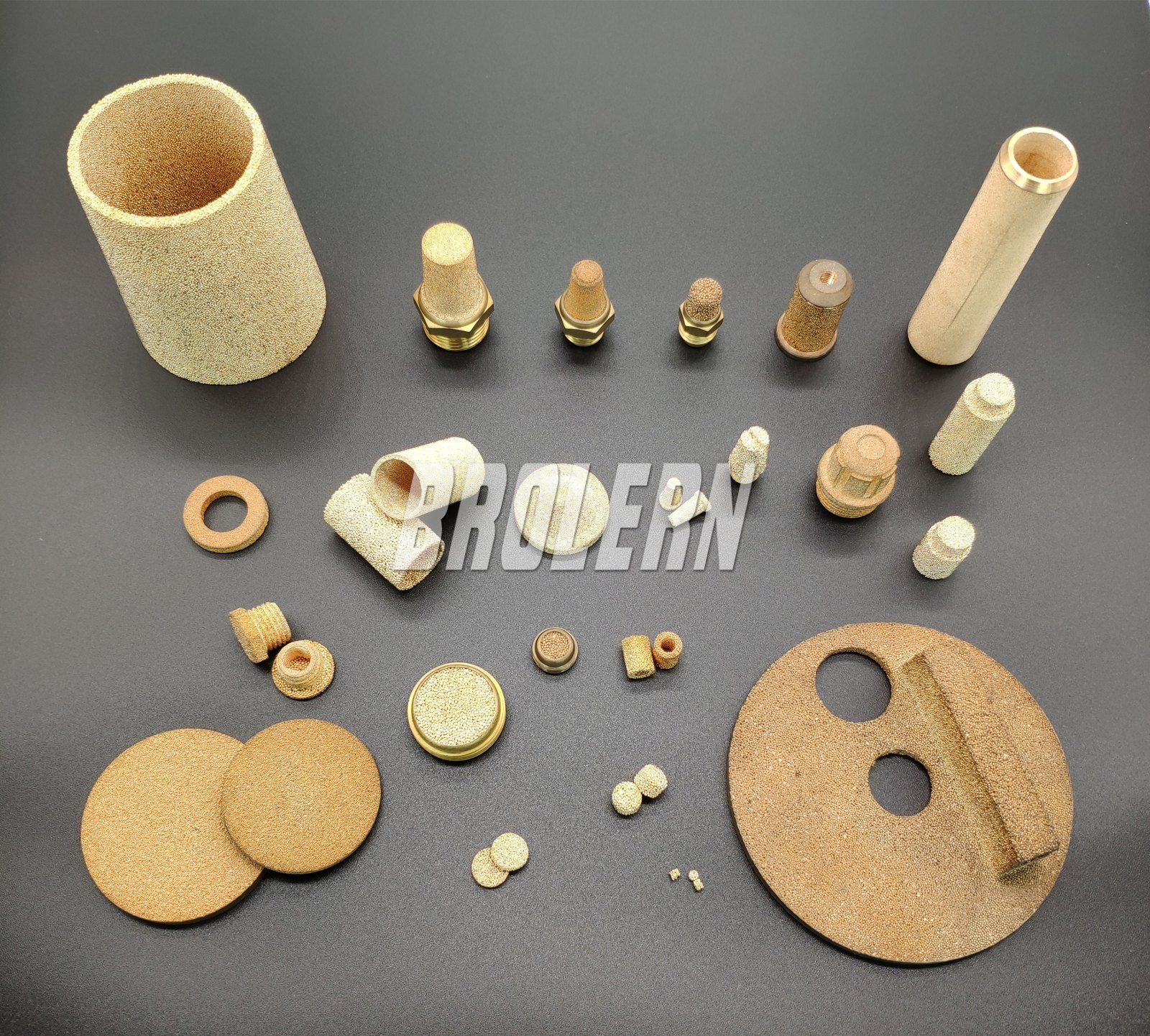
Off the lab bench and into the field, filtration has to survive what the environment throws at it: road salt and heat under the bonnet, seawater and vibration on a vessel, chloride-laden air offshore. In these duties the media choice stops being about micron rating alone and becomes a materials decision — which is exactly where sintered metal earns its place. This article covers the challenges and where sintered stainless and titanium, plus economical bronze, fit across automotive, marine and other harsh environments.
What "harsh" demands of the media
- Corrosion resistance — road salt, bilge, seawater and process chemicals attack ordinary metals.
- Temperature tolerance — engine bays, exhaust-adjacent and process streams exceed any polymer ceiling.
- Vibration and shock — the element must hold its pores and shape without loosening media.
- Reusability — in remote or demanding service, a clean-and-reuse element beats a disposable on total cost.
Material choices for harsh duty
| Aspect | Sintered bronze | Sintered 316L stainless | Sintered titanium |
|---|---|---|---|
| Corrosion | Good for air/water/oil | Broad chemical & general duty | Excels in chloride / seawater |
| Temperature | Moderate | High | Very high |
| Clean / reuse | Often | Many validated cycles | Many validated cycles |
| Cost | Low | Moderate | Higher (bought for the environment) |
Bronze is the economical default for general air, water and oil duty; 316L stainless is the workhorse for hot, pressurized and corrosive service; titanium is reserved for chlorides, seawater and extreme conditions where stainless would fail.
Where filtration matters in these sectors
- Automotive — hydraulic and transmission fluid protection, fuel-system screening, and breathers on tanks and gearboxes.
- Marine and offshore — seawater intake and ballast screening, bilge and hydraulic duty, and corrosion-resistant breathers.
- Heavy equipment and agriculture — hydraulic and lubrication protection in dusty, wet, high-vibration service.
- Chemical and process plants — where heat, pressure and aggressive fluids rule out polymer media.
Why sintered metal beats polymer and fibre here
Polymer and fibre media cannot take the temperature or the corrosion, and disposable elements are poor economics in remote or demanding service. A rigid sintered metal body sheds nothing, holds a reproducible rating, tolerates heat and pressure, and — critically — can be cleaned and returned to service many times. For chloride and seawater duty, titanium keeps working after stainless would corrode.
Specifying filtration for harsh environments
- State the fluid, concentration, temperature and pressure — these decide the alloy.
- Give the micron rating and whether it must be verified for the downstream component.
- Confirm vibration, shock and any cleanliness or regulatory needs.
- Match geometry and end fittings to the housing, and confirm the cleaning method you will use.
FAQ
Is titanium always the right metal for marine duty?
Only where stainless would be attacked — chiefly chlorides and seawater — or where extreme temperature and weight matter. For general hot, pressurized or corrosive duty, 316L stainless is the economical default; pay for titanium only when the environment needs it.
Can these elements really be cleaned and reused offshore?
Yes. Because the body is rigid and bonded, contaminants can be flushed, soaked or back-pulsed out and the element returned close to its original flow across many cycles, which is why metal sintered media wins on life-cycle cost in demanding service.
Why not just use a disposable cartridge?
In harsh, remote or high-cycle duty a disposable is poor economics and a supply headache. A cleanable sintered metal element returns to service many times and sheds nothing, which matters where downtime and contamination are both costly.
Conclusion
Automotive, marine and other harsh environments turn filtration into a materials problem, and sintered metal is the answer: rigid, heat- and pressure-tolerant, corrosion-resistant and cleanable. Choose 316L stainless for general hot, corrosive duty and titanium where chlorides and seawater would defeat it. Tell us your fluid, temperature, pressure and rating, and the BROLERN team will recommend the metal — and send a sample to confirm fit.