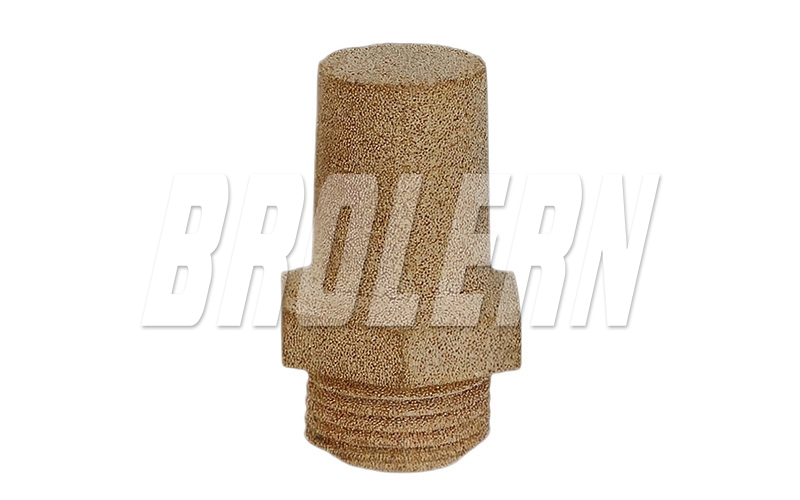
Compressed air is quiet inside the pipe and loud the moment it escapes. Every time a pneumatic cylinder or valve vents, a high-velocity jet of air expands into the room and produces the sharp hiss operators know well — often well above comfortable limits when many actuators vent in sequence. A pneumatic muffler is the cheap, passive fix: it attaches at the exhaust port and turns that single jet into a quiet, distributed flow. This article explains the silencing principle and where mufflers earn their place across industries.
The noise problem at the vent
A vent orifice accelerates air to high speed; the resulting turbulent jet radiates broadband noise, and the smaller and more numerous the vents, the worse the cumulative level on the factory floor. Beyond comfort, sustained exposure drives hearing-protection requirements and can fail local noise limits. Because the noise is generated at the exhaust, the most direct place to stop it is right at the port — which is exactly where a muffler sits.
How a muffler silences the exhaust
- Area spreading. Instead of one jet, the air is forced through a porous element, so its kinetic energy is spread over a large surface and the peak velocity drops.
- Velocity reduction. Lower peak velocity means far less turbulent noise radiated into the room.
- Resistive loss. The porous path dissipates acoustic energy as the air works through the media.
- No moving parts. The element simply passes air; there is nothing to wear or adjust.
Speed-control (throttling) mufflers add a needle or porous restriction so the same port both silences and meters the exhaust, letting you set actuator speed and quiet it in one component.
Materials and forms
| Form | What it does |
|---|---|
| Porous-metal muffler | Quiets exhaust through sintered media; rigid, oil-mist tolerant |
| Speed-control muffler | Silences and meters flow to set cylinder speed |
| Inline / elbow muffler | Fits tight spaces and odd port orientations |
| Threaded range | Commonly M5 up to 2 inch to suit most valves and cylinders |
The choice is driven by thread, flow and whether you also need speed control. Our selection guide sizes a muffler from thread and flow.
Where mufflers are used
- Factory automation and robotics — the largest use: banks of cylinders and grippers venting in sequence, where untreated noise compounds across the cell.
- Packaging and assembly — high-cycle actuators on filling, capping and pick-and-place lines.
- Automotive plants — body, powertrain and paint-shop pneumatics where noise limits apply.
- Medical and laboratory devices — quiet operation matters for user comfort and compliance.
- Compressors and tools — exhaust silencing at the source.
Choosing and fitting a muffler
- Match the thread to the vent port (M5 to 2 inch are common).
- Size for exhaust flow so the muffler does not throttle the actuator.
- Use a speed-control muffler where you also want to set the stroke speed.
- Confirm the pressure, temperature and any cleanliness needs of the line.
FAQ
Will a muffler slow my cylinder down?
A plain muffler only adds a small, designed restriction and should not stall the actuator. If you specifically want to set the speed, use a speed-control muffler that meters the exhaust by design.
How much noise does a muffler remove?
The reduction depends on port size, flow and the element, but the principle — spreading the jet and cutting peak velocity — routinely takes a sharp vent hiss down to a manageable level. Quantify it against your local noise limit with a measurement on the actual cell.
Do I need a muffler on every valve?
Practically, yes, wherever an actuator or valve vents to atmosphere in a space people occupy. The benefit is greatest where many vents operate together, because their noise adds up.
Conclusion
Pneumatic mufflers are the simple, passive answer to exhaust noise: a porous or resistive element at the vent that spreads the escaping air, cuts its peak velocity and quiets the line with no moving parts — and, in speed-control form, also sets the actuator speed. From automation and robotics to packaging, automotive and medical devices, they belong at every atmospheric vent. Tell us your thread, flow and pressure, and the BROLERN team will recommend the right muffler and send a sample.