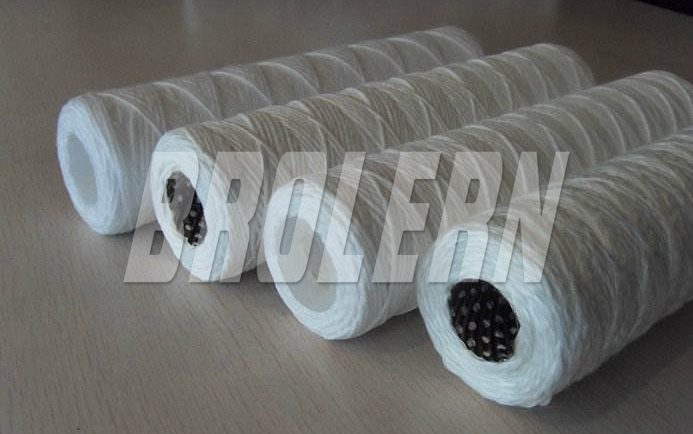
In electronics and semiconductor manufacturing the filter is part of the product, not just part of the pipe. A single fibre or particle that migrates from the media into a wet-etch bath, a cleaning chemistry or a DI-water loop can become a defect on the wafer. That makes two properties non-negotiable: no media migration and chemical resistance to the aggressive acids, bases and solvents these processes run on. This article covers how to specify porous filter cartridges for high-purity electronics duty.
What high-purity duty demands
- Zero media migration. No loose fibres or wires to shed. Wound or loose-fibre elements are the wrong tool here — a shed particle is a potential defect.
- Chemical resistance. The media must survive etch, clean and solvent chemistries without swelling, cracking or leaching.
- Low extractables. The element should not release its own constituents into an ultra-clean stream.
- Controlled, verifiable retention. A stated rating you can verify, so the filter is a known quantity in the process.
Media that meet the bar
| Media | Why it fits high-purity duty |
|---|---|
| PVF (fluoropolymer) | No fibre shedding, porosity above 90% for high flow at low ΔP, broad chemical resistance |
| Sintered stainless (316L) | Bonded metal, no migration, cleanable and sterilizable, validated cleaning regimes |
| Sintered plastic (PE/PP) | Inert, fibre-free, food/pharma-grade resins for compatible aqueous chemistries |
The common thread: all three are bonded structures — there is nothing loose to shed. That is what separates them from wound or loose-fibre cartridges, however fine those are rated. See why PVF is specified for shedding-free duty and how sintered media avoids migration.
Where these cartridges sit in the process
- Process and etch chemicals — point-of-use and bulk filtration of acids, bases and solvent blends.
- DI water and rinsing loops — final polish where particles would carry to the wafer.
- Clean and prep chemistry — protecting baths from debris introduced by tanks, pumps and lines.
- Compressed gases and cleans — keeping particles out of dry processes.
Specifying for a qualified line
- State whether the rating must be absolute and verified (bubble-point or challenge test) — for qualified processes this is usually mandatory.
- Provide the exact chemistry, concentration and temperature so compatibility can be confirmed per grade.
- For regulated lines, ask what documentation ships with the element (material certs, cleanliness, extractables) — our validation package article covers what to request.
- Confirm the housing and seals are equally clean and compatible — the element is only part of the wetted path.
FAQ
Why can't I use a fine wound cartridge for semiconductor duty?
Because a wound element is loose yarn held by tension — it can shed fibres and shift under shock, both of which are defect sources in a high-purity process. Bonded media (PVF, sintered metal, sintered plastic) have nothing to shed.
Is a nominal rating acceptable for electronics?
Rarely. Qualified processes need a verified absolute rating with a stated test method, not a nominal efficiency class, so the filter's retention is a known, auditable quantity.
How do I confirm the media resists my etch chemistry?
Send the exact chemistry, concentration and temperature. Fluoropolymer media such as PVF cover a very broad range, but compatibility is grade-specific and must be confirmed against your fluid before it goes into a qualified line.
Conclusion
Electronics and semiconductor filtration comes down to bonded, shedding-free media that resist the process chemistry and offer verifiable retention: PVF for aggressive, high-flow duty, sintered stainless where cleanability and strength matter, and sintered plastic for compatible aqueous chemistries. Send us your chemistry, temperature, rating and flow, and the BROLERN team will confirm the media and supply a sample for qualification.